
Waste Management in Cameroon
A practical reference to how waste management operates in Cameroon, covering waste collection, disposal, recycling, waste recovery and companies involved in different parts of the system.
How does waste management operate in Cameroon?
Waste management in Cameroon involves several levels rather than a single nationwide collection system. Municipal and urban authorities are responsible for public sanitation, while waste collection and treatment services may be operated through contracted companies. Private collectors, local workers, households and recycling businesses also form part of the wider system.
The practical system can differ depending on the city, neighbourhood and type of waste. In some areas, organised collection services use designated collection points or accessible routes, while households and businesses may also rely on smaller private or local arrangements.
What happens to waste?
Household and business waste is generally placed in collection points, containers or accessible locations where collection services can reach it. Depending on the area, waste may also be moved from homes to larger collection points through pre-collection arrangements. It is then collected and transported for disposal or treatment.
Recycling and waste recovery also exist, but they are carried out through separate companies and initiatives rather than representing a single system through which all waste passes. Some materials, particularly plastic waste, may be collected, sorted and processed for reuse.
Waste management companies and initiatives in Cameroon
Below are five companies and initiatives involved in different parts of waste management in Cameroon. They include household waste collection, recycling, waste recovery and emerging local initiatives. Each operates differently depending on its activities, locations and business model.
Tanko Enterprise
What Tanko does
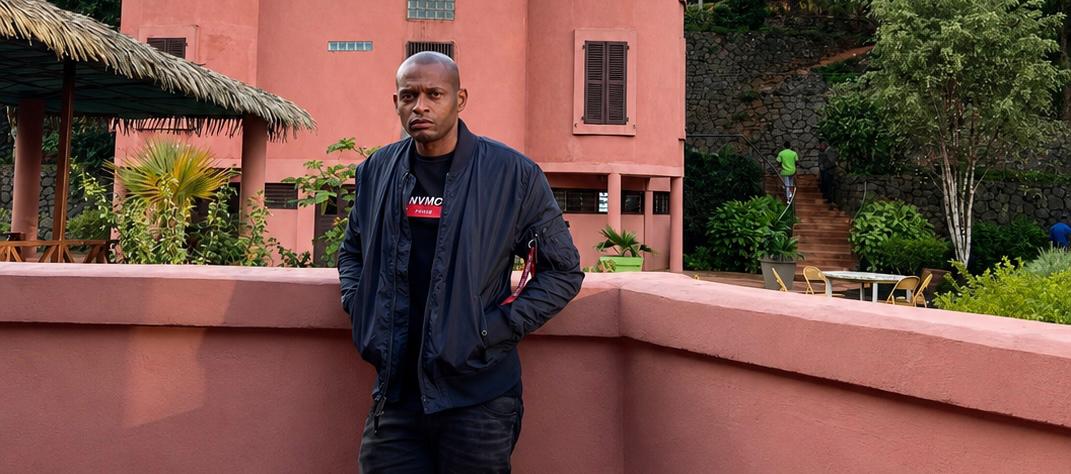
Tanko is an emerging waste management enterprise in Cameroon. Its activities focus on practical approaches to waste disposal, environmental clean-up and improving how waste is organised in local communities.
The enterprise has developed and introduced Tanko waste bins (bacs à ordures), which have been placed in certain neighbourhoods and markets. Tanko also carries out environmental clean-up activities, including moving through parts of Yaoundé to collect and remove waste from polluted public spaces and waterways. These activities involve volunteers and other participants working alongside the initiative.
Tanko presents its role as supporting municipalities in improving the organisation of waste management rather than replacing the responsibilities of local authorities. The enterprise is currently active in Yaoundé and Douala, while also developing projects in other locations.
Tanko's stated direction includes expanding its waste-management activities, working with additional municipalities and increasing the presence of its waste bins in other parts of Cameroon. The enterprise has also expressed longer-term ambitions to expand beyond Cameroon.
Company background
Tanko emerged from environmental activities that later developed into practical waste-management initiatives. The enterprise is associated with Achille Tanko, an environmentalist and environmental advocate whose earlier work included documenting pollution, examining waste-management conditions and participating in environmental clean-up activities.
These activities later developed into practical initiatives, including waste bins, community clean-ups and projects focused on improving the organisation of waste disposal.
Operations
Tanko currently carries out activities in Yaoundé and Douala, with waste bins introduced in selected neighbourhoods and markets. Its approach includes environmental clean-up activities and collaboration with volunteers and local communities.
The enterprise also works with municipalities as part of its approach to waste management. According to statements about its ongoing development, Tanko has been developing three pilot waste-management centres in Simbok, Kribi and Foumban. The Simbok project was described as involving collaboration with the Yaoundé VI municipality.
As Tanko is still an emerging enterprise, its activities and operational coverage may continue to develop.
HYSACAM
What HYSACAM does
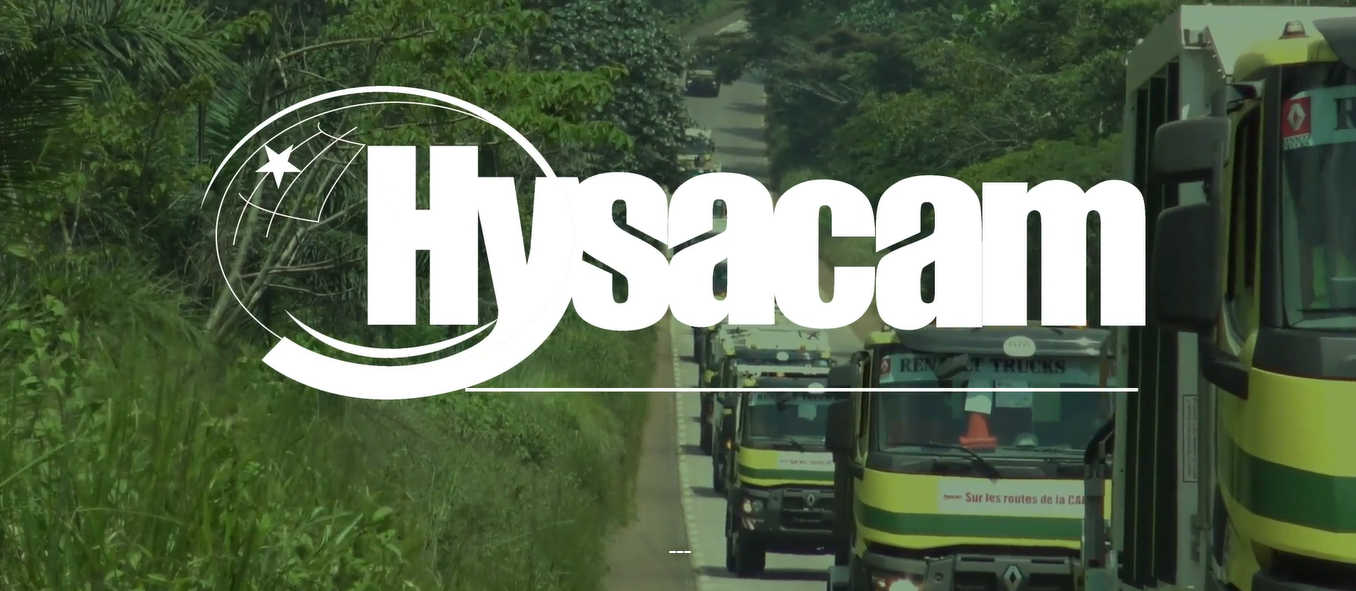
HYSACAM, short for Hygiène et Salubrité du Cameroun, is a Cameroonian company involved in large-scale urban waste management. Its activities cover several parts of the waste-management chain, including the collection and transport of household waste, street cleaning and sweeping, treatment of waste, composting, and biogas recovery.
Unlike smaller waste initiatives that may operate within individual neighbourhoods, HYSACAM works through large municipal waste-management contracts. Its activities are connected to the public waste-management system, with the company providing services for cities and local authorities.
The company is particularly associated with household waste collection in major Cameroonian cities. Waste is collected from designated collection points and public areas, transported using specialised vehicles, and taken to disposal or treatment facilities. HYSACAM's activities have also included street cleaning, market cleaning, composting and the recovery and treatment of biogas from landfill sites.
Company background
HYSACAM was created in 1969 and began its operations in Douala, making it one of the longest-established waste-management companies operating in Cameroon.
The company was originally created to support the hygiene and sanitation needs of Douala as the city expanded. Over time, its activities extended beyond Douala into other Cameroonian cities.
HYSACAM later became one of the country's main private operators in municipal waste management. Its development reflects the model used in Cameroon in which local authorities and public institutions can rely on private companies to carry out waste collection and sanitation services.
Operations
HYSACAM operates through municipal and public-service waste-management contracts. Its operations include the collection, transport and treatment of household waste, as well as the cleaning of streets, public places and markets.
The company operates in several cities across Cameroon through waste-management contracts with local authorities. Yaoundé and Douala are among its major areas of operation, alongside other cities where the company has provided urban sanitation and waste-management services.
HYSACAM also operates beyond basic waste collection. Its activities have included landfill management, composting and biogas recovery. The company has developed biogas capture and treatment facilities associated with landfill sites in Yaoundé and Douala.
NAMé Recycling
What NAMé Recycling does
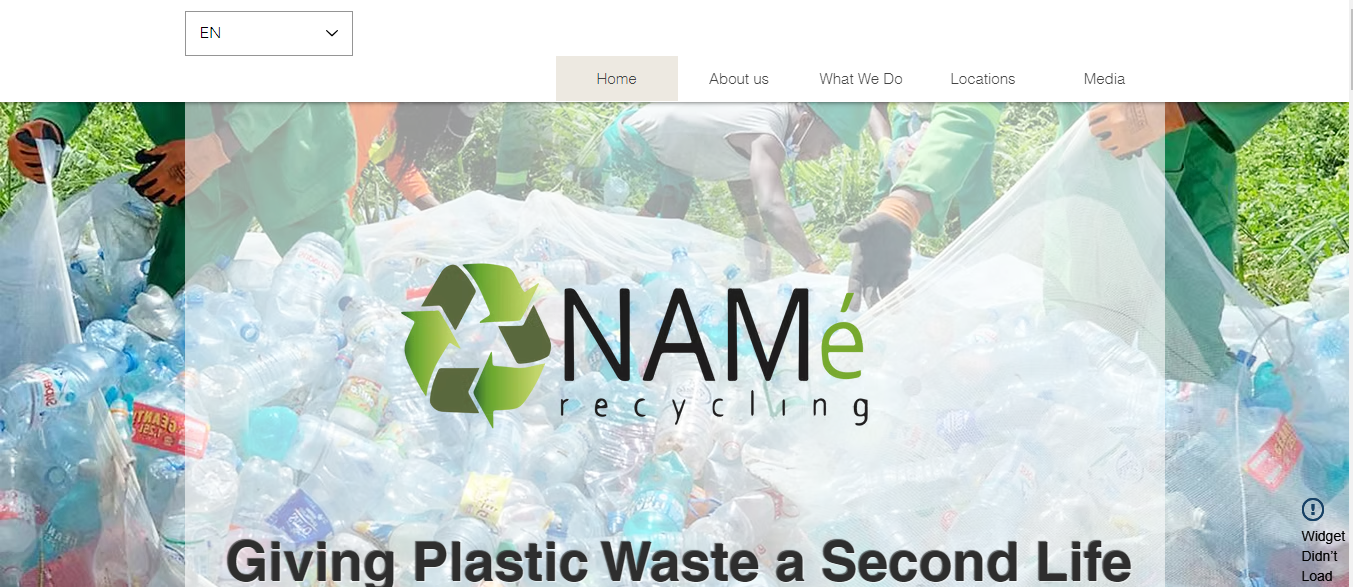
NAMé Recycling is a Cameroonian company focused on the collection and recycling of plastic waste. Its activities cover plastics including PET, HDPE and LDPE.
The company works through a collection-and-recycling model. Plastic waste is collected through independent collectors, households, streets, businesses and collection points. The materials are then sorted according to their type, washed and processed into recycled materials.
According to the company's description of its operations, the processed plastic can be transformed into products and materials including plastic flakes, pellets and PET straps. These recycled materials can then be sold for further use locally or internationally.
This makes NAMé Recycling different from companies primarily responsible for collecting mixed household waste: its activity is centred on recovering and recycling plastic as a material.
Company background
NAMé Recycling was developed by two entrepreneurs, Roblain Namegni and Thomas Poelmans. The company's plastic-recycling activity began in Cameroon in 2016, initially with operations connected to Limbe. The company later expanded its operations to other locations.
NAMé Recycling describes itself as part of a circular-economy model: plastic waste is collected and processed so that it can re-enter economic use instead of simply remaining waste.
The company has also expanded beyond Cameroon, with operations associated with Cameroon and Gabon, while Brussels serves as its corporate headquarters.
Operations
In Cameroon, NAMé Recycling has developed operations associated with Douala and Yaoundé, while its earlier recycling activity began in Limbe. The company describes a collection network involving independent collectors and businesses, alongside collection points and bins used to recover plastic waste.
The operational process generally follows several stages:
Collection → Sorting → Washing → Processing → Sale or reuse
Plastic waste is separated according to its material type before being cleaned and processed. Depending on the material and production process, the resulting recycled materials can be used in further manufacturing or sold as recycled raw materials.
NAMé Recycling has also worked with collection-bin initiatives. For example, NAMé bins have been installed at some commercial locations in Yaoundé and Douala, allowing plastic waste to be deposited for subsequent collection and recycling by the company.
ECOGREEN Recycling
Location: Bonabéri industrial zone, Douala, Cameroon.
What ECOGREEN does
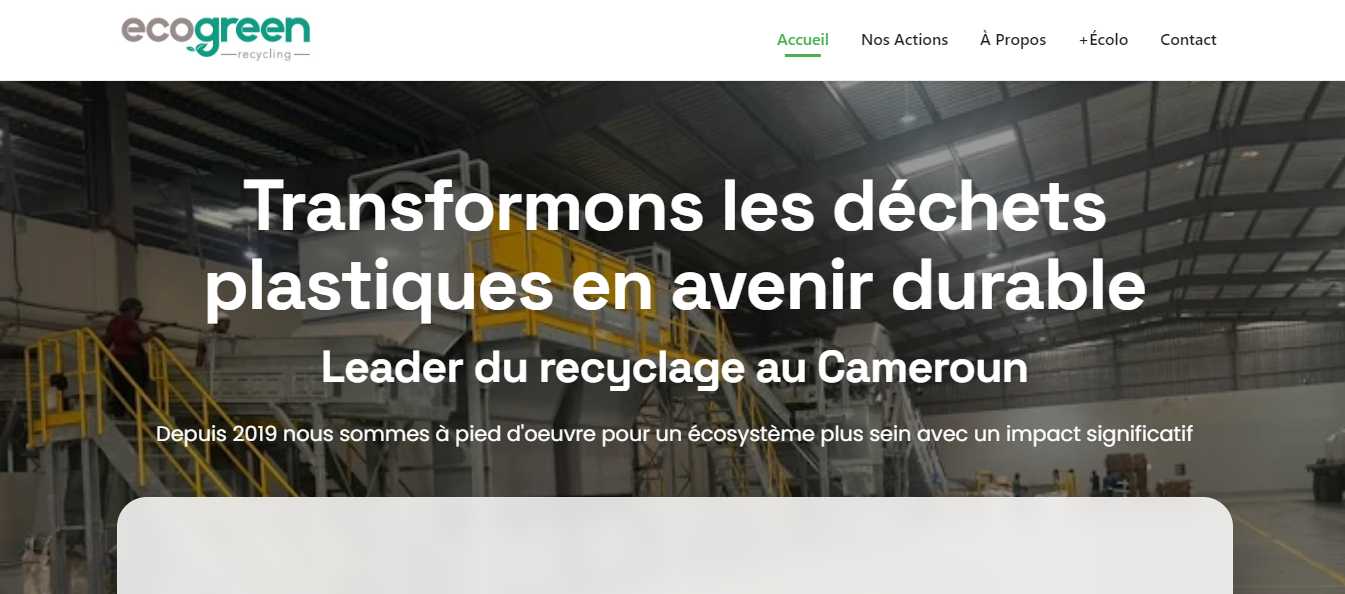
ECOGREEN Recycling is a Cameroonian company specialising in the collection, transport, sorting, recycling and recovery of plastic waste, particularly PET and HDPE plastics. Its model covers the process of recovering plastic waste and transforming it into recycled material.
The company also forms part of a wider collection network. ECOGREEN encourages independent collectors to participate in recovering plastic bottles and states that it has a support programme for collectors. This means that the collection of plastic waste and its industrial recycling can involve different actors: individuals, collector networks and smaller organisations can recover and prepare plastic waste, while recycling companies process the material further.
This relationship can extend to organised collector groups. A 2025 WasteAid report documented an ongoing arrangement in which the Cameroonian collectors' cooperative Scoops Eco-Friendly sold recovered plastic waste to ECOGREEN, which acted as a plastics off-taker.
ECOGREEN's activity therefore differs from general municipal waste collection. Its role is centred on recovering plastic waste and processing it into material that can re-enter the industrial value chain.
Company background
According to ECOGREEN's own presentation, the project began in 2019, when the idea of creating the company was developed around plastic reuse and reducing plastic pollution in Cameroon. The COVID-19 period slowed the project's development.
The company states that it began collecting plastic waste in 2022 and started recycling operations at its Bonabéri facility in 2023.
ECOGREEN is based in the Bonabéri industrial zone in Douala, where its recycling facility is located.
Operations
ECOGREEN's industrial recycling operations are centred in Bonabéri, Douala. Plastic bottles and other recyclable plastics enter the company's recycling chain through collection activities, independent collectors and other supply partners.
The company's model illustrates how waste management can involve several levels of activity. A smaller business or collector does not necessarily need to operate a recycling factory. Plastic can be collected and supplied to a specialised recycling company that has the equipment to process it.
At the recycling facility, the material passes through several stages, including collection and transport before sorting, washing and processing. The recovered plastic is then transformed into recycled material for further industrial use.
SECA
What SECA does
SECA, formally Services Camerounais d'Assainissement S.A., provides waste-management, sanitation and environmental hygiene services in Cameroon. Its waste-management activities include the sorting, collection, transport, treatment and recovery of waste.
The company works with different types of waste, including industrial, special, dangerous and non-dangerous waste. Its activities also extend beyond waste management to industrial cleaning and sanitation services.
SECA's role therefore differs from companies focused mainly on household collection or plastic recycling. It provides specialised services to businesses, industries and other organisations that need waste and sanitation solutions adapted to their activities.
Company background
SECA was created in 1974 and is based in Douala. According to the company's history, it was originally created within the HYSACAM group to develop services related to industrial waste management.
Over the years, SECA expanded its activities beyond the collection and transport of industrial waste. Its services developed to include industrial cleaning, sanitation, environmental hygiene, treatment of hazardous waste and other specialised environmental services.
The company progressively expanded beyond Douala, establishing operations in Yaoundé and other parts of Cameroon. SECA's official history states that the company has developed a presence across the country's ten regions.
Operations
SECA operates through specialised equipment and services adapted to the type of waste or sanitation work involved. Its waste-management process can include recognising and sorting waste, collecting and transporting it, before it is treated, recovered, recycled or disposed of according to its characteristics.
The company handles several categories of industrial waste. These include non-hazardous industrial waste as well as waste requiring specialised handling, such as chemical products, oils, batteries, electronic waste, medical waste, hydrocarbon sludge and contaminated materials.
SECA also operates agencies and services in several locations, including Douala, Yaoundé, Garoua, Bafoussam, Limbé, Edéa, Kribi and Nkoteng, according to its current contact information.
In addition to waste management, the company provides industrial sanitation and cleaning services, including cleaning industrial installations, tanks and other facilities, as well as sanitation work such as septic-tank emptying and drainage maintenance.
VadeVise System Notice
Information provided is for reference only and is based on independent observations. Prices, services, and workflows may change without notice. VadeVise is not affiliated with this institution.